The relationship between pharmaceutical tariffs and US manufacturing has shifted from a long-running policy conversation into a near-term operational reality. In April 2026, a Section 232 proclamation established tariffs of up to 100 percent on patented pharmaceuticals produced by companies that have not made qualifying US manufacturing commitments. The first wave of duties takes effect between July and September 2026, and procurement, supply chain, and regulatory affairs teams across the industry are now actively reassessing their sourcing footprint.
For drug sponsors who rely on overseas contract manufacturers, the questions are no longer hypothetical: what is covered, what is not, and how fast can volume be shifted to a domestic partner without disrupting commercial supply.
Article Contents
What the April 2026 Section 232 Proclamation Established
The proclamation invokes Section 232 of the Trade Expansion Act, which authorizes tariffs on imports that the executive branch determines pose a national security concern. In this case, the underlying finding is that concentration of pharmaceutical production outside the United States, particularly for finished oral solid dose products and key intermediates, creates strategic vulnerability. Companies that have publicly committed to building or expanding qualifying US manufacturing capacity may receive partial or full relief. Those without such commitments face the full tariff schedule on covered patented products.
Generic pharmaceuticals are currently exempt from the Section 232 pharma tariffs, but that exemption is under formal review. The Department of Commerce has signaled that the carve-out could be narrowed, scoped to specific therapeutic categories, or removed entirely depending on the findings of an ongoing supply chain assessment. Sponsors of generic, hybrid, and 505(b)(2) products should not treat the current exemption as durable. Tariff coverage of finished dosage forms produced under contract arrangements is a particular area of regulatory ambiguity, and category-level guidance is expected before the September effective date.
The Risk Profile for Sponsors With Overseas Contract Manufacturing
For sponsors whose commercial supply depends on overseas contract manufacturing outsourcing, the exposure is multidimensional. A 100 percent landed-cost increase on a finished product compresses gross margins immediately and, in many cases, makes the existing supply arrangement economically unviable. Pricing relief through payer negotiation is slow and uncertain. Reformulation to qualify under a different tariff classification carries its own regulatory cost and timeline.
Beyond the direct cost impact, sponsors face a secondary risk: concentration. If multiple sponsors using the same overseas contract manufacturer attempt to reshore simultaneously, available US capacity will tighten quickly. Sponsors who initiate technology transfer activity first will secure the most favorable slot allocation, scale-up support, and validation timelines. Sponsors who wait will compete for residual capacity in a constrained market.
Why an Established US-Based CDMO Is the Practical Adjustment Mechanism
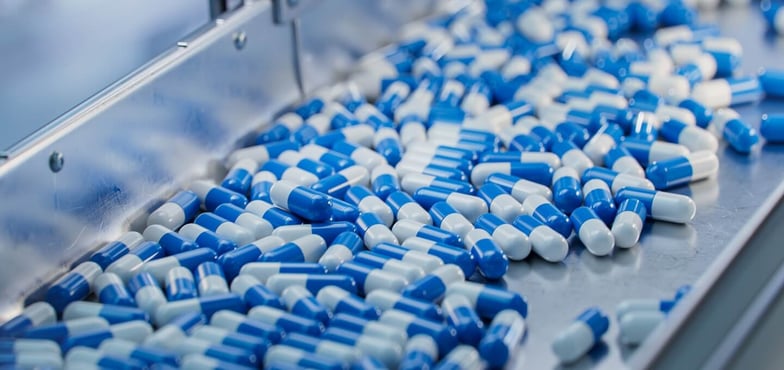
The US-based CDMO advantages in this environment are concrete rather than theoretical. An operational domestic facility with current Good Manufacturing Practice (cGMP) compliance, validated equipment trains, an active FDA inspection history, and demonstrated commercial-scale output can absorb transferred volume on a timeline measured in months, not years. This is the central distinction between reshoring as a strategic concept and reshoring as an executable plan.
UPM Pharmaceuticals offers commercial manufacturing services at scale from its Bristol, Tennessee facility, supporting oral solid dose, controlled-release, and semi-solid finished drug products for sponsors moving away from tariff-exposed supply chains. Broader pharmaceutical manufacturing capabilities cover the full development-to-commercial continuum, which matters for sponsors who need a single domestic partner for both clinical and commercial supply rather than splitting work across multiple facilities.
The Timeline Challenge: Reshoring From Scratch vs. Reallocating to Existing Capacity
Industry analyses generally place the timeline for building new US pharmaceutical manufacturing capacity from a greenfield site at four to ten years. Site selection, capital approval, construction, equipment qualification, regulatory inspection, and process validation each add meaningful time. For sponsors facing tariff effective dates inside of twelve months, building new capacity is not a near-term answer.
Reallocating volume to existing, operational US CDMO capacity is the fastest adjustment mechanism available. A well-executed technology transfer to a facility with the right equipment, training, and regulatory history can move commercial supply on a timeline of 6 to 18 months, depending on product complexity, analytical method bridging, and regulatory filing requirements. UPM's technology transfer and scale-up support services are structured specifically around this kind of accelerated reshoring scenario, with dedicated technical teams managing the transfer protocol, validation strategy, and regulatory submission package.
This contrast is the practical core of contract manufacturing outsourcing 2026 strategy. The sponsors who succeed will be the ones who recognize that the question is not whether to reshore but which domestic partners have the operational maturity to absorb transferred volume without sacrificing quality or schedule.
UPM Pharmaceuticals: A Ready-Now Domestic Partner
UPM has operated its commercial manufacturing facility in Bristol, Tennessee, for more than 13 years. The site supports tablets, capsules, powders, suspensions, and controlled-release formulations across clinical and commercial scales, with batch sizes ranging from development quantities through full commercial output. As a family-owned, US-headquartered CDMO with a long-standing FDA inspection history, UPM is positioned to serve as the domestic alternative for sponsors evaluating their options in the current trade environment.
The broader industry context behind this shift, including the structural and policy drivers behind reshoring pharmaceutical manufacturing from overseas back to the US market, reflects a multi-year trend that the Section 232 proclamation has now accelerated. For sponsors who need to act inside the 2026 effective-date window, the path forward is not theoretical capacity but operational capacity, available now, with a partner whose track record predates the tariff conversation by decades.
Drug sponsors evaluating their response to the current tariff environment are invited to contact UPM Pharmaceuticals to discuss technology transfer feasibility, capacity availability, and timeline planning for commercial supply reallocation.
FAQs
Are generic drugs currently subject to the Section 232 pharmaceutical tariffs announced in April 2026?
Generic pharmaceuticals are currently exempt from the April 2026 Section 232 pharmaceutical tariffs, but the exemption is under formal review by the Department of Commerce. The carve-out could be narrowed, scoped to specific therapeutic categories, or removed depending on the findings of an ongoing supply chain assessment. Sponsors of generic, hybrid, and 505(b)(2) products should not treat the current exemption as durable.
How quickly can a pharmaceutical company realistically shift volume from an overseas contract manufacturer to a US-based CDMO?
Building new US pharmaceutical manufacturing capacity from a greenfield site generally takes four to ten years. Reallocating volume to an existing, operational US CDMO is much faster. A well-executed technology transfer to a facility with the right equipment, training, and regulatory history can move commercial supply on a timeline of 6 to 18 months, depending on product complexity, analytical method bridging, and regulatory filing requirements.
Do tariff exemptions apply to oral solid dose and semi-solid finished drug products manufactured under a contract arrangement?
Tariff coverage of finished dosage forms produced under contract arrangements is an area of regulatory ambiguity as of mid-2026. The current Section 232 framework covers patented pharmaceuticals from companies without qualifying US manufacturing commitments, while generics remain exempt under review. Category-level guidance addressing contract-manufactured oral solid dose and semi-solid finished products is expected before the September 2026 effective date.
CONTACT US
Partner With a CDMO That Supports Your Program From Development Through Commercial Scale
UPM Pharmaceuticals has advanced many compounds from concept to commercialization, offering integrated services from formulation and analytical development through commercial drug manufacturing, all from a single, FDA-inspected facility in Bristol, Tennessee. Whether your program is in early development or ready for commercial scale, our team engages with transparency and senior-level attention from day one. Get to know our large-scale CDMO or contact us to discuss your program.
Quality and Regulatory Support Contact UPM Pharmaceuticals